




The top 8 mistakes when taking Vitamins and how you can avoid them.
Where do the vitamins in your capsule come from? Does the dosage match your needs? And what role do meals, medications, and organic certification play?
Anyone choosing and taking dietary supplements should be able to answer these questions. A vitamin name on the packaging doesn’t reveal how the nutrient was produced. And a high dosage isn’t automatically the right one.
Here you can find out what to look for – and the differences that make our organic-certified Ogaenics products unique.
Intake Mistake #1: You assume your vitamins come from fruit and vegetables
Most vitamins in dietary supplements are industrially produced. They are not extracted from lemons, berries, or vegetables, even if you associate these foods with the respective vitamin.
Chemical and biotechnological processes are used for production. In chemical synthesis, vitamin compounds are created through chemical reactions. In fermentation, microorganisms handle specific production steps. Genetically modified bacteria, fungi, or yeasts can also be used for this.
Vitamin C is an example: Industrial production processes use sugar as a starting material and combine chemical and biological steps depending on the method. A vitamin C supplement therefore does not automatically contain an extract from vitamin C-rich fruits.
How the ingredients list helps you
| Information in the ingredients list | What you can learn from it |
|---|---|
| L-ascorbic acid | Vitamin C was added as an isolated compound. In standard supplements, this is industrially produced. |
| Amla or acerola extract | A fruit extract is included. Also check the nutrient table on the pack to see what amount of vitamin the manufacturer assigns to this extract. |
| Acerola extract, L-ascorbic acid |
The product contains a fruit extract plus additional isolated vitamin C. |
A fruit name or fruit image alone does not prove that the entire vitamin comes from that fruit. Many manufacturers use mixtures of plant ingredients and additionally added synthetic nutrients. Synthetically produced vitamins are about 100x cheaper than natural standardized fruit extracts, making this a popular practice.
-

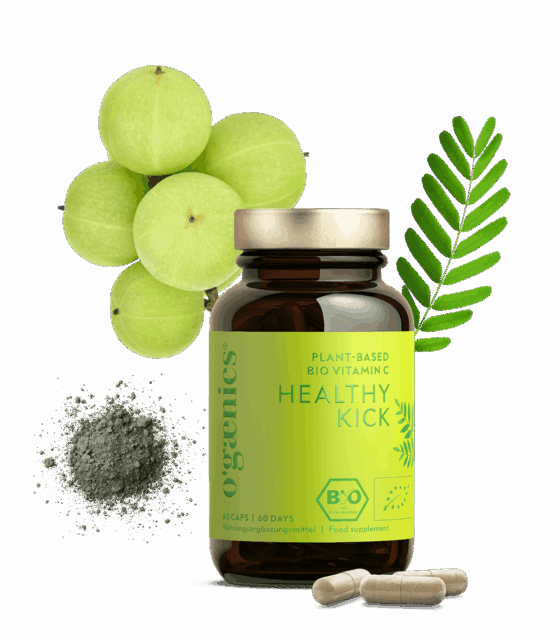
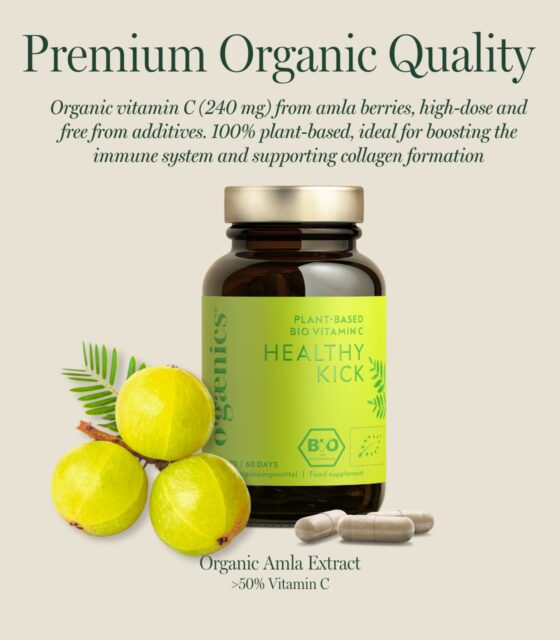
Healthy Kick
60-day supply of plant-based organic vitamin C from premium organic amla extract with polyphenols for the immune system29,90 €869,19 € / kg
-
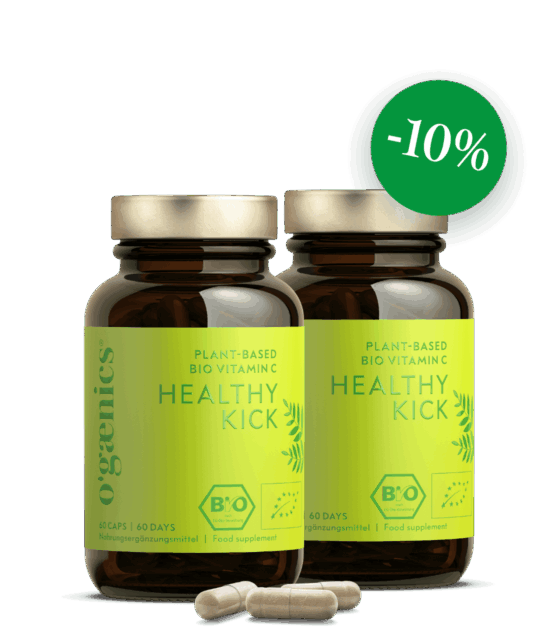
Set 2x Healthy Kick | Plant-Based Organic Vitamin C
2-pack (=4-month supply) of organic vitamin C from premium organic amla extract in a natural combination with polyphenols for the immune system53,80 €59,80 €869,19 €781,98 € / kg

“Natural,” “vegan,” and “organic” mean different things
“Natural” is not a uniformly protected production standard for vitamins. “Vegan” describes the absence of animal components but does not prove extraction from fruits or vegetables. Organic certification, on the other hand, is bound by mandatory production rules and inspections.
These requirements specifically apply to organic dietary supplements:
No enrichment with isolated vitamins: This is not permitted for standard organic dietary supplements. Legal exceptions apply to mandatory additives and certain specialty foods, among others.
No use of genetic engineering: Genetically modified organisms and products made from or by them must not be used.
No treatment with ionizing radiation: This ban applies to organic foods and their raw materials.
The basics are found in Article 9(4), Article 11, and Annex II Part IV Point 2.2.2(f) of the EU Organic Regulation 2018/848.
For conventional vitamins, the use of genetically modified microorganisms in production is not generally subject to labeling requirements. A lack of GMO information therefore does not prove that such processes were excluded. Consumer Advice Center: Genetic engineering in vitamin production
What Ogaenics does differently
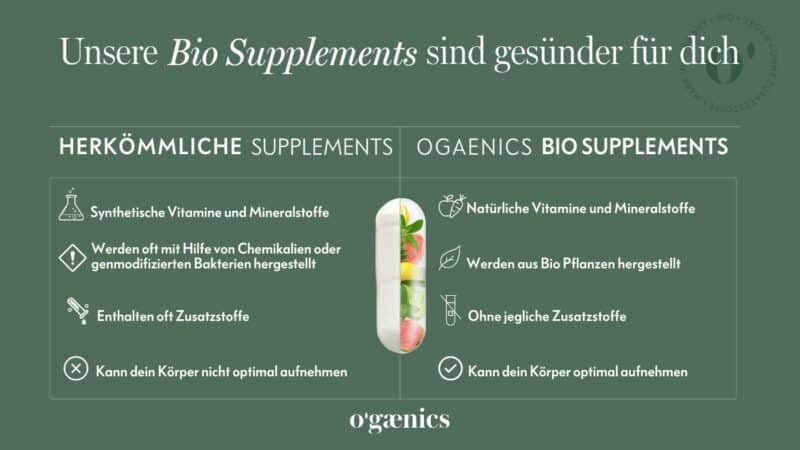
Our Ogaenics products are organic-certified. We use plant-based organic nutrient sources and do not add synthetic vitamins. Genetic engineering processes and ionizing radiation are excluded by organic requirements.
Our vitamin C, for example, comes from organic amla extract. You can find the respective nutrient source in the ingredients list and our product information. Compliance with organic requirements is verified by an organic control body. You can learn more under Ogaenics Quality.
How to avoid the mistake: Check the full ingredients list, the specifically named nutrient sources, and the organic labeling. Also look for whether additional isolated vitamin compounds are listed. This helps you better identify if a product meets your expectations regarding origin and production.
Intake Mistake #2: You stop taking it because you don’t feel a difference
You’ve been taking vitamins for a few days and don’t notice anything? That doesn’t automatically mean the supplement isn’t working. A change in your nutrient supply is not necessarily felt immediately.
Perhaps you expect more energy or less fatigue. However, whether a supplement helps with this depends on whether your symptoms are actually related to an insufficient nutrient supply. Vitamins do not fundamentally provide a noticeable energy boost.
If you are supposed to compensate for a diagnosed deficiency, stick to the agreed duration of intake and the planned check-ups. How you feel day-to-day alone does not reliably show whether you are sufficiently supplied.
How to avoid the mistake: Clarify at the start why you are taking the supplement, how long the intake makes sense, and how its benefit can be assessed. Don’t stop taking it just because a quick effect is missing. But don’t continue taking it indefinitely without checking your needs.
At Ogaenics: Our product advice helps you with questions about selection and intake. If symptoms persist or a deficiency is suspected, the clarification belongs in your doctor’s office.
Intake Mistake #3: You combine several supplements without comparing their composition
Multiple products can contain the same nutrients or influence each other’s absorption. Therefore, check the combination as a whole.
A multivitamin, a B-complex, and a product for skin or hair can each provide B vitamins, for example. This duplication is easily overlooked if you only look at the advertised area of application.
The interaction of different nutrients also deserves attention. Vitamin C improves the absorption of non-heme iron from plant-based foods. Calcium, on the other hand, can impair iron absorption. For separate iron and calcium supplements, staggered intake can therefore be useful.
This does not imply a general ban on combination supplements. The decisive factors are the respective amounts, the composition, and the purpose of your intake.
How to avoid the mistake: Compare the nutrient tables before adding another product. If you are treating a diagnosed deficiency, have additional supplements included in your intake plan.
How Ogaenics supports you: We coordinate the nutrient amounts and intake recommendations of our products with each other. In our recommended combinations, we take into account that the amounts contained add up.
For nutrients that can impair each other’s absorption when taken simultaneously, we recommend taking them at different times. You can find the corresponding notes in our recommended intake. This allows you to separate the intake in time and prevent the nutrients from hindering each other in the digestive tract.
This thoughtful coordination runs through our entire range. Still unsure which products fit together or when you should take them? Book a free consultation with our Ogaenics Nutrition Coaches.
Intake Mistake #4: You take your vitamins on an empty stomach, even though a meal would be sensible
A meal can improve the absorption of certain nutrients and make the intake more tolerable. Especially with fat-soluble vitamins, it is worth paying attention to the combination with food.
How a meal influences digestion
Eating changes how quickly the stomach passes its contents to the small intestine. Depending on the composition of the meal, this passage can occur more slowly. Furthermore, food influences digestive juices and the release of nutrients.
The speed of gastrointestinal passage – also called transit time – therefore plays a role in digestion and nutrient absorption. A longer transit time for your vitamins by taking your capsule with a meal can therefore be an advantage.
Fat-soluble vitamins need fat
There are vitamins for which you have no choice if you want them to be well absorbed: the fat-soluble vitamins A, D, E and K. They can only be effectively absorbed into the bloodstream if they are metabolized together with fat. Fat improves the bioavailability of these fat-soluble vitamins.
A human study showed that the absorption of vitamin D was significantly higher when it was taken with a meal containing fat – compared to taking it on an empty stomach
(PMC3235461).
Even small amounts of healthy fats are enough: a few nuts, some avocado, yoghurt or a piece of wholemeal bread with olive oil are enough to significantly improve the absorption of fat-soluble vitamins.
-
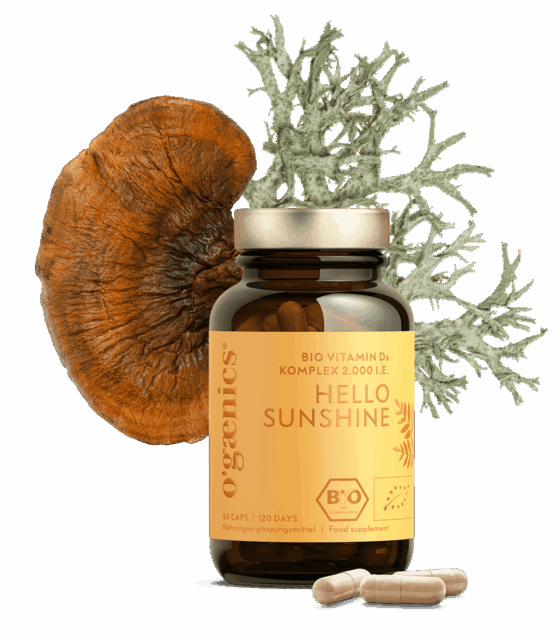
Hello Sunshine
Plant-Based Organic Vitamin D3 from organic lichen with 2,000 I.U. per capsule plus organic riceishiab 24,90 €1.817,52 € / kg
-
Bestseller
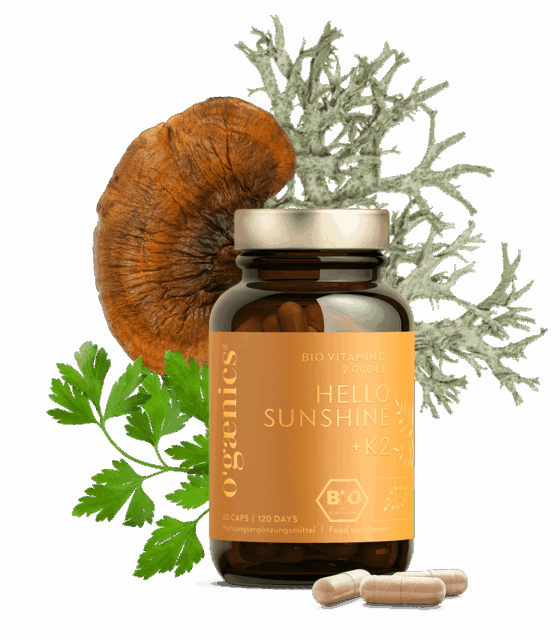
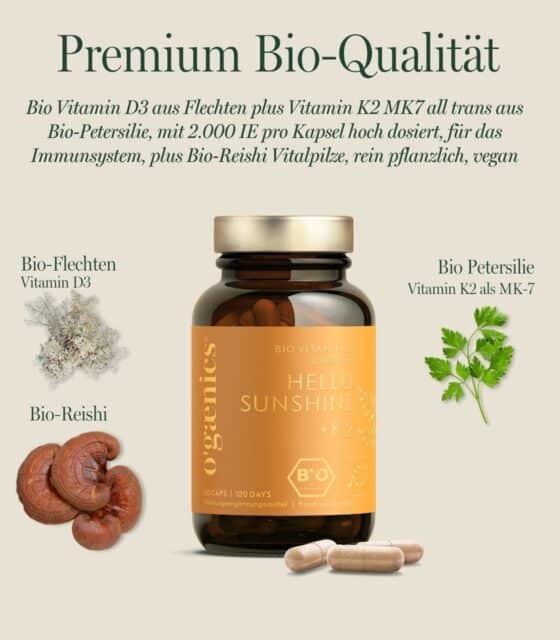
Hello Sunshine plus K2
4-month supply with organic vitamin D3 from organic lichen 2,000 I.U. plus active partner K2 as MK-7 and organic riceishi49,90 €1.744,76 € / kg

Minerals also like company
Minerals – such as calcium, magnesium or zinc – are also more difficult to digest on an empty stomach. For optimal absorption of calcium, you also need sufficient stomach acid, which is produced when you eat.
Studies show that calcium absorption is more efficient in combination with meals than on an empty stomach(PMC425063).
Anyone with a sensitive stomach will therefore benefit from taking food supplements together with a meal. A meal acts as a natural buffer and prevents stomach irritation or nausea.
How to avoid the mistake: Follow the recommended intake for your supplement. If it says “with a meal,” plan the intake directly with your food.
How Ogaenics supports you: You will always find the appropriate recommended intake on our packaging and product pages. It takes into account when you should take the respective product and whether a meal is part of it. If you are unsure, book a free consultation with our Ogaenics Nutrition Coaches.
Intake Mistake #5: You wash down your iron supplement with coffee or tea
Taking the capsule with your morning coffee sounds practical. However, for iron-containing supplements, this habit can impair absorption.
Coffee and tea contain plant substances called polyphenols. These can reduce the absorption of non-heme iron – the form of iron that also occurs in plant-based foods.
A controlled study showed: If black tea was drunk only one hour after an iron-containing meal, the inhibitory effect was lower than when drinking it simultaneously. The gap can therefore make a difference.
What does this mean for your intake?
Take your iron supplement with water and drink coffee or tea at a different time. Follow the instructions for your product.
How to avoid the mistake: Also check your multivitamin to see if it contains iron. Plan the intake so that it fits the product instructions and your coffee or tea routine.
-
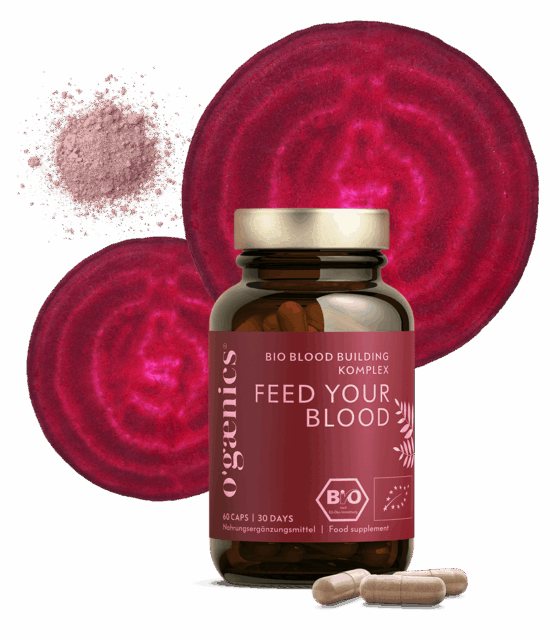
Feed Your Blood
Bio Blood Building 3-in-1 complex with iron, B12, folate and vitamin C from organic plants74,90 €1.867,83 € / kg
-
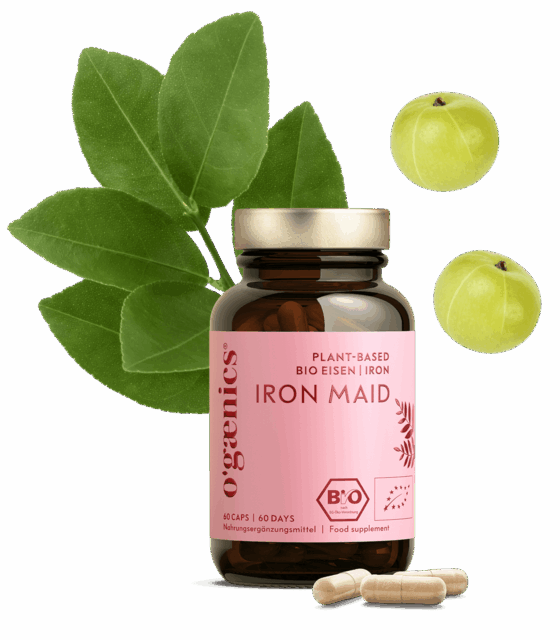
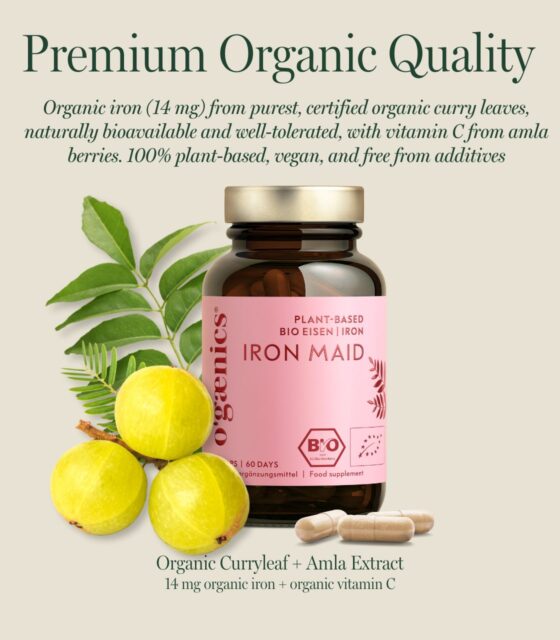
Iron Maid
60-day supply of organic iron from premium organic curry leaf extract with active partner vitamin C from organic amla extract54,90 €1.389,87 € / kg

At Ogaenics: Refer to the nutrient table of your respective product. Our Nutrition Coaches will help you in a free consultation to integrate your supplements sensibly into your daily routine.
Intake Mistake #6: You don’t pay attention to interactions with medications
Even natural and organic-certified dietary supplements can interact with medications. The decisive factors are the substances contained and their effect.
Here are the most important examples, which are also scientifically well documented:
Vitamin K ↔ Blood thinners (warfarin)
Vitamin K plays a crucial role in blood clotting.
If you take blood thinners like warfarin, large fluctuations in vitamin K intake can change the effect of these medications.
➡️ Consistency is important: not too much and not too little – but roughly constant amounts of vitamin K every day so that your blood coagulation value remains stable. (PMC2911546)
Proton pump inhibitors (PPIs) ↔ Vitamin B12
PPIs like omeprazole or pantoprazole reduce stomach acid production.
This is useful for stomach problems – but stomach acid is necessary to release vitamin B12 from food or to absorb calcium optimally.
Several studies show: Long-term use of PPIs may be associated with vitamin B12 deficiency – even if the data is not completely consistent.
➡️ If you take PPIs regularly, have your vitamin B12 status checked occasionally(PMC9577826)
Antibiotics (tetracyclines & fluoroquinolones) ↔ Minerals (iron, calcium, magnesium)
These antibiotics can form so-called chelates with minerals – chemical compounds that block the absorption of the antibiotic in the intestine. This can reduce the effectiveness of the medication.
➡️ Make sure you take your antibiotics at least 2-3 hours apart from your mineral supplements.(PMC89761)
Thyroid hormones (levothyroxine) ↔ iron / calcium
If you are taking thyroid hormones such as levothyroxine, taking iron or calcium supplements at the same time can reduce the absorption of the hormone in the intestine.
This can lead to your body receiving less active ingredient and your thyroid levels (TSH) rising.
➡️ It is best to take levothyroxine in the morning on an empty stomach – and wait at least 4 hours before taking iron or calcium (PMC8002057, PMC3092723).
Why is this intake mistake excluded with Ogaenics?
These interactions are well-researched – and easy to avoid if you know them.
Maintain a time gap between medications and dietary supplements, and seek advice if you are unsure.
At Ogaenics, our Nutrition Coaches free of charge to help you tailor your supplements safely and individually to your everyday life – so that everything works together as it should. 🌿
Intake Mistake #7: You pay attention to the vitamins – but not to the additives
In a dietary supplement, there can be other substances besides vitamins and minerals: such as fillers, anti-caking agents, glazing agents, or carriers. Some do not have to appear in the ingredients list under certain conditions.
Anyone who wants to know what a supplement contains and how it was produced should therefore take a closer look.
Why not everything is on the label
Additives subject to labeling requirements are generally stated with their function and their name or E number. However, there are exceptions:
- Additives introduced via ingredients: If a substance is already contained in a plant extract and no longer fulfills a technological function in the finished product, the labeling requirement may be waived.
- Processing aids: These are used for specific production steps and do not have to be listed under legal requirements.
- Certain carriers: There are also exceptions for substances that transport other ingredients or facilitate their use, if they are only used in the strictly necessary amounts.
A short ingredients list is not a complete proof of production
A processing aid can be used and then removed again. Technically unavoidable residues may remain under certain conditions: They must be harmless to health and must not exert any technological effect in the final product. Regulation on Food Additives, Article 3
The ingredients list therefore does not automatically show all substances used during production.
This does not mean that every additive is problematic. For approval, safety and technological necessity, among other things, must be evaluated. Federal Ministry: Approval of additives
What “without additives” must state
An exception from the labeling requirement is not a free pass for a “without” promise: Even voluntary information must not be misleading. If avoiding certain substances is important to you, ask specifically whether it also includes the raw materials used and their processing. EU Food Information Regulation, Article 7
Why Ogaenics starts right at the raw material
A plant extract can be offered with a carrier that facilitates its processing. That’s why it’s not enough for us to only avoid additional substances in the finished capsule.
We work directly with our raw material manufacturers and check which substances are used during extraction and processing. Our claim: no synthetic additives or processing aids – not even via purchased ingredients. Our formulas do not require fillers.
We distinguish between the legal organic requirements and our own formula standards: Certain additives and processing aids are permitted for organic foods. Our avoidance goes beyond this in certain points. EU list of substances permitted for organic, Annex V
You can learn more about our raw material selection and independent testing under Ogaenics Quality.
How to avoid the mistake: Check the entire ingredients list and look for transparent information on raw material production on the dietary supplement manufacturer’s website. Even a capsule is often not automatically free of additives – the specific formula is what matters.
Intake Mistake #8: You take your vitamins irregularly
Taken on Monday, forgotten on Tuesday, remembered again at the weekend: If your supplement is intended for daily intake, you should make it a firm habit.
Anyone who regularly skips portions takes in fewer nutrients over the week than intended. Whether this impairs the supply depends on the respective nutrient, your diet, and your baseline supply. Especially if you are supposed to compensate for a diagnosed deficiency, it is important to stick to the agreed intake plan.
How to avoid forgetting
You need a routine that works even on hectic days:
- Link the intake to a fixed daily step. If your supplement should be taken with food, daily breakfast or dinner is a good option, for example. Pay attention to possible gaps between coffee, tea, or medications.
- Get reminded. A mobile phone alarm can help until the intake has become a habit.
- Record whether you have taken your portion. A checkmark in the calendar or in an app also prevents you from accidentally taking it twice.
- Plan for when you’re on the go. Take the required portions with you when traveling and follow the storage instructions on the packaging.
What to do if you have forgotten an intake?
Do not double the next portion on your own. Follow the instructions for your supplement or your medical intake plan. If you frequently forget something, simplify the routine instead of catching up on the skipped amounts later.
How Ogaenics supports you
We make the intake as uncomplicated as possible: Many of our products only require one capsule daily. You will find the respective recommended intake on every packaging and product page.
Our recommended product combinations take into account both the combined nutrient amounts and sensible intake times. This allows you to integrate your products into a clear routine.
Unsure how this fits into your daily life? Book a free consultation with our Ogaenics Nutrition Coaches.
By the way: Incorrect intake of vitamins can lead to an undersupply. But how do you recognize a vitamin deficiency? For information on alarm signs that you should definitely look out for, see our article “Recognizing vitamin deficiency, these are the alarm signs”.
Frequently Asked Questions about taking vitamins
Many vitamins can be taken together. The composition and the total amount are decisive: Multiple supplements can contain the same nutrients. For certain combinations, such as separate iron and calcium supplements, a staggered intake can be useful. Therefore, follow the respective recommended intake.
That depends on the supplement. Vitamin D, for example, is better absorbed if the meal contains some fat. The tolerability of certain mineral supplements can also be improved by taking them with food. Refer to the recommended intake for your product.
Take your iron supplement with water and drink coffee or tea at a different time, as both can reduce iron absorption. Follow the instructions for your specific supplement.
Do not double the next portion on your own. Follow the instructions for your supplement or your medically agreed intake plan. A reminder on your phone and linking the intake to a suitable meal can help you remember in the future.
Look for specifically named plant sources in the ingredients list, for example amla or acerola extract. If L-ascorbic acid is also listed, the product also contains separately added vitamin C. A fruit image or the note “with acerola” alone does not prove that the entire vitamin C comes from fruits.
“Natural” does not refer to a uniformly protected production standard for vitamins. Organic-certified dietary supplements, on the other hand, are subject to mandatory requirements and inspections: The use of genetic engineering and ionizing radiation is prohibited; the enrichment of organic dietary supplements with isolated vitamins is not permitted. Ogaenics uses plant-based organic nutrient sources and does not add synthetic vitamins.
-
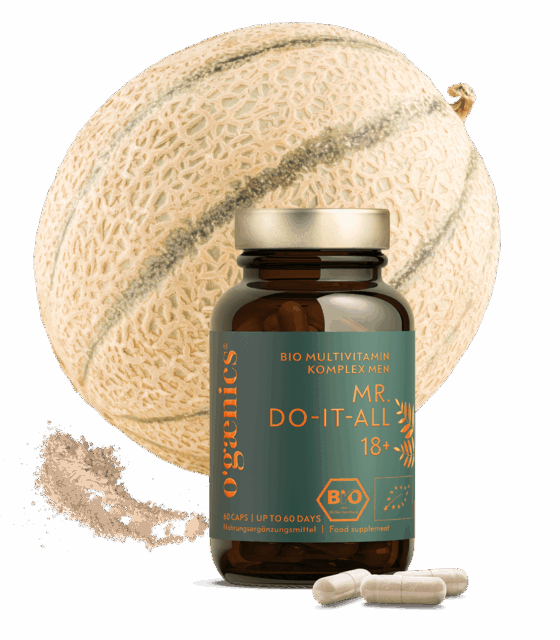
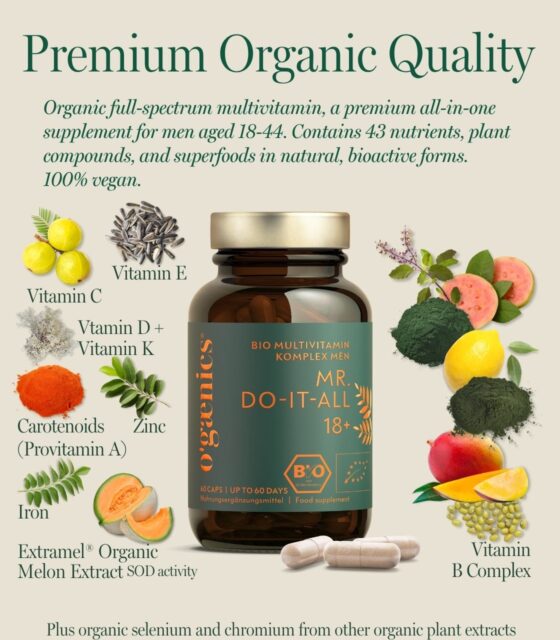
Mr Do-It-All 18+
Organic Multivitamin Complex Premium for men between 18 and 44, All-In-One79,90 €2.069,95 € / kg
-
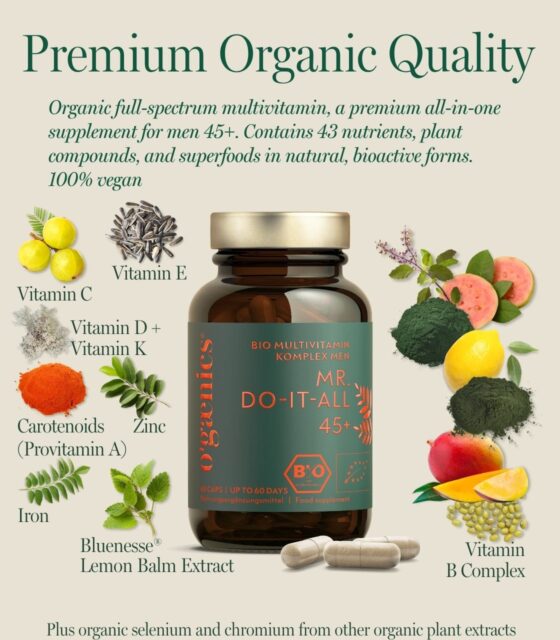
Mr Do-It-All 45+
Organic Multivitamin Complex Premium for men aged 45 and over, All-In-One79,90 €2.048,72 € / kg
-
Bestseller
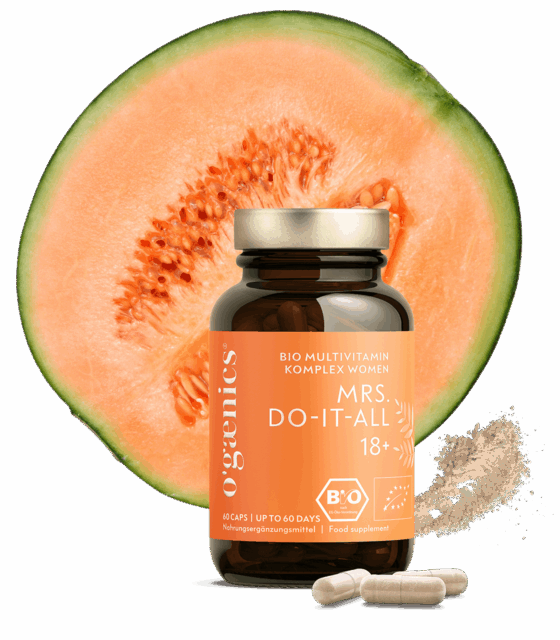
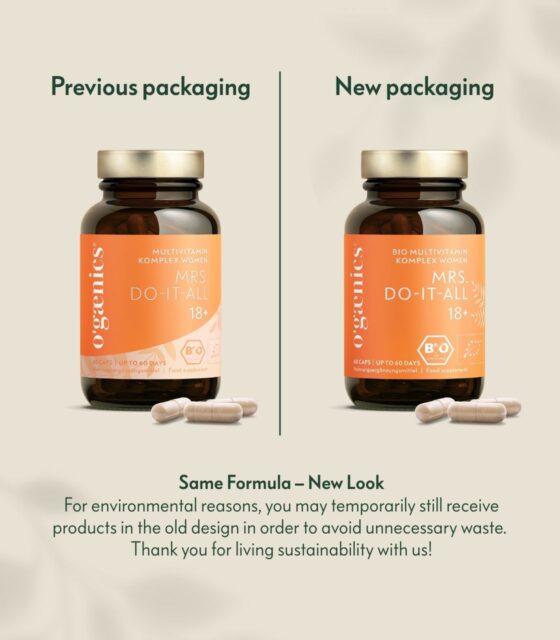
Mrs Do-It-All 18+
Organic Multivitamin Complex Premium for women of fertile age, All-In-One!79,90 €2.302,59 € / kg
-
Bestseller
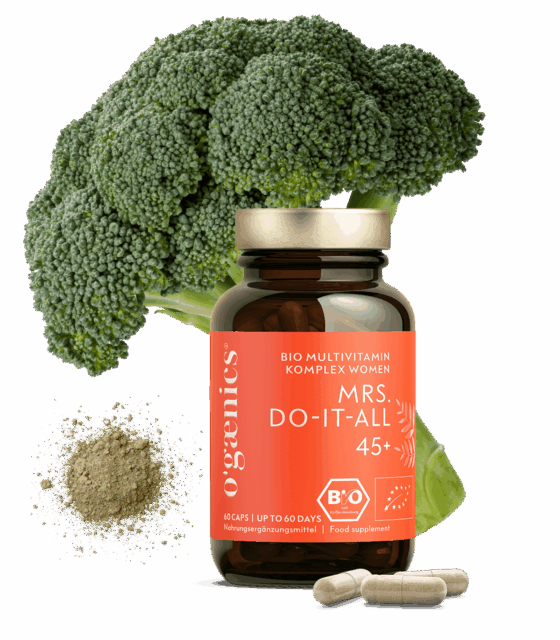
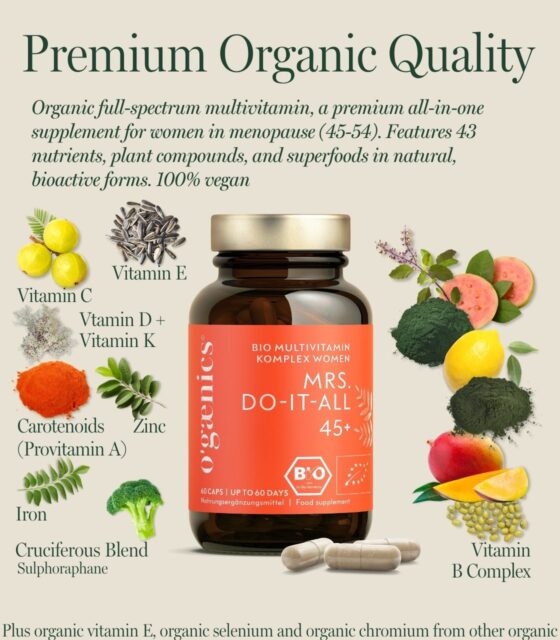
Mrs Do-It-All 45+
Organic Multivitamin Complex Premium for menopausal women, All-In-One!79,90 €1.997,50 € / kg
-
Bestseller
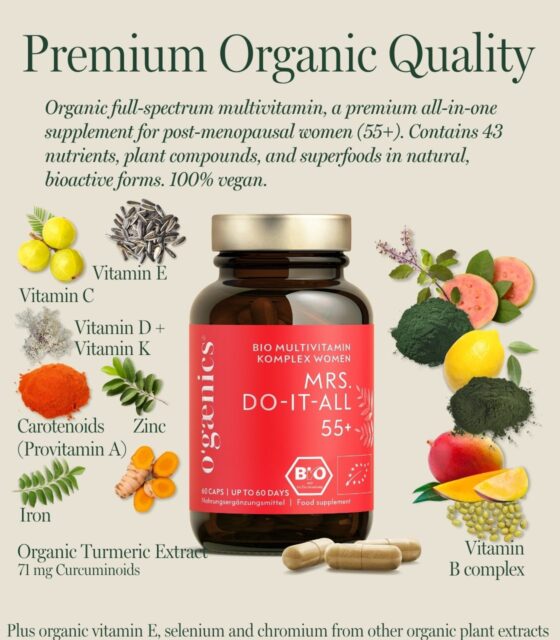
Mrs Do-It-All 55+
Organic Multivitamin Complex Premium for women after the menopause, All-In-One!79,90 €1.997,50 € / kg
-
Mrs. Prenatal
The best organic multivitamin complex for pregnancy and breastfeeding, 100% natural, all-in-one!79,90 €1.736,96 € / kg




Regarding Point 1: Origin and production of vitamins
- Consumer Advice Center: Natural, synthetic or genetic – how vitamins are produced. As of: 2026-08-18. Information on production processes, genetic engineering, and notes in the ingredients list.
- Hancock RD, Viola R (2002): Biotechnological approaches for L-ascorbic acid production. Trends in Biotechnology, 20(7), 299–305. Scientific overview of the industrial production of vitamin C.
Regarding Points 2 and 8: Expectations, intake plan, and regularity
- National Institutes of Health, Office of Dietary Supplements: Dietary Supplements: What You Need to Know. General information on benefits, limitations, and safe use of dietary supplements as well as documentation of intake.
Regarding Point 3: Combination of nutrients
- National Institutes of Health, Office of Dietary Supplements: Iron – Fact Sheet for Health Professionals. Information on iron absorption, the influence of vitamin C and calcium, and interactions.
Regarding Point 4: Meals, digestion, and nutrient absorption
- Scientific Overview (2018): Gastrointestinal Transit Time, Glucose Homeostasis and Metabolic Health: Modulation by Dietary Fibers.
- Raimundo FV et al. (2011): Effect of High- versus Low-Fat Meal on Serum 25-Hydroxyvitamin D Levels after a Single Oral Dose of Vitamin D. International Journal of Endocrinology, 2011, 809069. Randomized study comparing a high-fat and a low-fat meal with a single dose of vitamin D.
- Clinical Study (2015): Dietary fat increases vitamin D-3 absorption. Investigation into the influence of the fat content of a meal on the absorption of vitamin D3.
- National Institutes of Health, Office of Dietary Supplements: Vitamin D – Fact Sheet for Health Professionals. Information on vitamin D absorption and the role of dietary fat.
- National Institutes of Health, Office of Dietary Supplements: Calcium – Fact Sheet for Consumers. Differences between calcium carbonate and calcium citrate as well as notes on taking with meals.
- NHS Specialist Pharmacy Service: Treating acute hypomagnesaemia in adults. Professional information on treating magnesium deficiency, including notes on taking oral magnesium supplements with meals.
Regarding Point 5: Iron, coffee, and tea
- Controlled Human Study (2017): A 1-h time interval between a meal containing iron and consumption of tea attenuates the inhibitory effects on iron absorption. American Journal of Clinical Nutrition, 106(6), 1413–1421. Investigation into the influence of a one-hour gap between an iron-containing meal and black tea.
- NHS: How and when to take ferrous sulfate. Practical intake instructions for ferrous sulfate, including coffee, tea, and meals.
Regarding Point 6: Interactions with medications
- Lurie Y et al. (2010): Warfarin and vitamin K intake in the era of pharmacogenetics. British Journal of Clinical Pharmacology, 70(2), 164–170. Overview of the influence of vitamin K intake on warfarin treatment.
- Mumtaz H et al. (2022): Association of Vitamin B12 deficiency with long-term PPIs use: A cohort study. Annals of Medicine and Surgery, 82, 104762. Observational study on the association between long-term PPI use and vitamin B12 deficiency.
- Wiesner A, Gajewska D, Paśko P (2021): Levothyroxine Interactions with Food and Dietary Supplements—A Systematic Review. Pharmaceuticals, 14(3), 206. Systematic review of interactions of levothyroxine with food and dietary supplements.
- Zamfirescu I, Carlson HE (2011): Absorption of Levothyroxine When Coadministered with Various Calcium Formulations. Thyroid, 21(5), 483–486. Investigation into reduced levothyroxine absorption when taken simultaneously with various calcium compounds.
- DailyMed, U.S. National Library of Medicine: Ciprofloxacin – Drug Information. Product-specific information on interactions with mineral-containing supplements and required intake intervals.
Regarding Point 7: Ingredient labeling, additives, and organic certification
- Regulation (EU) No 1169/2011 – Food Information Regulation: Legal text on EUR-Lex. Particularly relevant: Article 7 on the prohibition of misleading information, Article 18 on the ingredients list, Article 20 on labeling exceptions, Article 21 and Annex II on allergen labeling, and Annex VII on the designation of ingredients.
- Regulation (EC) No 1333/2008 on food additives: Legal text on EUR-Lex. Particularly relevant: Article 3 on the definition of processing aids and Article 18 on the carry-over principle for additives.
- Federal Ministry of Food and Agriculture: Approval and use of food additives. Information on safety, technological necessity, and approval.
- Regulation (EU) 2018/848 on organic production: Legal text on EUR-Lex. Particularly relevant: Article 9(4) on the prohibition of ionizing radiation, Article 11 on the prohibition of the use of GMOs and products made from or by them, and Annex II Part IV Point 2.2.2(f) on the use of vitamins and minerals.
- Commission Implementing Regulation (EU) 2021/1165: Legal text on EUR-Lex. Annex V contains the additives and processing aids permitted for organic food processing.
- Commission Implementing Regulation (EU) 2018/775: Legal text on EUR-Lex. Rules on the origin labeling of primary ingredients where the origin differs from the origin indication of the food.
Further information from Ogaenics
- Our Quality: Organic raw materials, formulas, and testing
- Book a free consultation with our Nutrition Coaches
The Ogaenics pages explain our products and quality standards; they are not independent scientific studies.


 No products in the cart.