



Why the source of the nutrients in your multivitamin makes all the difference
Multivitamins are among the most commonly used supplements. You’ll find them in drugstores, pharmacies, and online shops at every price point. Their labels promise support for energy, the immune system and nervous system, as well as skin, hair, and bones.
What’s far less well known is that most multivitamins are made from synthetically produced vitamins and isolated mineral compounds. Many of these vitamins are created in industrial processes from petrochemical starting materials. But that has very little to do with real nutrients your body can actually use.
If you’ve taken a multivitamin for months and still felt exhausted or poorly nourished, it’s worth taking a closer look at the ingredients list.
What sets food-based multivitamins apart from synthetic ones?
Food-based multivitamins get their nutrients from real food sources. The vitamins and minerals are extracted from plants, mushrooms, or algae—not synthesized from non-food starting materials.
They remain part of their natural food matrix: a complex structure of proteins, enzymes, and cofactors that naturally surrounds the nutrients.
That matters, because vitamins and minerals don’t work in isolation. They work together with other nutrients and plant compounds. If a vitamin is completely removed from this context—or synthesized from scratch—this natural environment is missing. The body then has to activate or convert it and provide the required cofactors elsewhere.
A food-based multivitamin delivers nutrients the way they occur in the diet: embedded in the nutritional context that supports their absorption and utilization.
The problem with synthetic multivitamins
Most multivitamins on the market contain synthetic vitamins and minerals derived from petrochemical starting materials. Some are produced via fermentation using genetically modified bacteria.
The ingredients list then includes names like thiamine hydrochloride (as vitamin B1), cyanocobalamin (as vitamin B12), or DL-alpha-tocopheryl acetate (as vitamin E). Synthetic folic acid is also standard. Minerals are often added as zinc oxide, ferrous fumarate, sodium selenite, or chromium chloride.
Thiamine hydrochloride, used as vitamin B1, is derived from coal tar derivatives. Cyanide is used in the production of cyanocobalamin, the most common synthetic form of vitamin B12. Folic acid is a synthetic, oxidized form of folate that does not occur anywhere in nature.
These synthetic forms first have to be converted by the body. And that process is by no means a given.
Synthetic folic acid goes through several enzymatic steps before it can be used in metabolism as active 5-MTHF. A key step depends on the MTHFR enzyme. Common gene variants affecting 40–60% of the population can reduce its activity by 30–70%. For these people, synthetic folic acid may offer little benefit and may even interfere with natural folate metabolism. Yet folic acid is still the form used in the vast majority of supplements.
The inexpensive, synthetically produced B12 cyanocobalamin has to be converted into methylcobalamin or adenosylcobalamin. Each of these steps requires enzymes, cofactors, and metabolic energy—resources your body may not have in abundance if you’re already under stress.
By contrast, in an Ogaenics organic multivitamin, the vitamins sourced from real foods such as organic plants, organic mushrooms, or organic algae are already in their active form—or close to it—and are embedded in the cofactor matrix the body uses to process them.
What to look for in a multivitamin
Three factors determine whether a multivitamin is truly sourced from real foods.
The source.
On the label, the ingredients list should name specific food sources. These include amla, guava, and curry leaf, as well as lichens, shiitake, or spinach. If no source is named and only chemical vitamin compounds appear in the ingredients list, they are isolated, synthetic nutrients.
The forms. In the nutrition table, look for methylcobalamin and adenosylcobalamin instead of cyanocobalamin, and folate instead of folic acid. These are the active forms you can use directly.
The amounts. A good multivitamin provides meaningful amounts of the most important vitamins and minerals. A long ingredients list with tiny “fig-leaf” amounts isn’t enough. Check the daily dose and the stated nutrient reference value.
That’s exactly what the Ogaenics organic plant extract blend in our multivitamins is based on. The organic-certified whole extracts from plants, algae, and mushrooms that we use at Ogaenics are gently extracted so the nutrients and cofactors integrated in the food matrix are preserved and combined into effective formulas in meaningful amounts.
The result is an organic multivitamin complex the body recognizes as food—because on a molecular level, that’s exactly what it is.
Multivitamins and your body: the most important connection
Every cell in your body depends on vitamins and minerals. Almost every metabolic process requires micronutrients that work together.
Energy production in the mitochondria needs B vitamins. Iron contributes to oxygen transport. Vitamin C supports iron absorption.
The immune system needs vitamins A, C, and D as well as zinc and selenium. The nervous system depends on B vitamins. Vitamin D supports bones and muscles. Biotin, zinc, and selenium support skin, hair, and nails.
If individual nutrients are missing, the whole network can stall. Fatigue and concentration problems can be early signs. Low resilience, changes in skin and hair, or increased susceptibility to infections can also indicate inadequate supply.
That’s why a multivitamin should do more than list isolated single nutrients. It needs to bring together the nutrients the body uses in combination every day.
Sustainable energy instead of an artificial kick
One of the most important differences to understand is how multivitamins actually affect energy supply—unlike stimulants.
Caffeine and stimulants create a short-term boost in alertness by blocking adenosine receptors and triggering the release of adrenaline. But this energy is only temporary. The energy crash that follows is a physiological strain.
Multivitamins work completely differently. The natural B vitamins and other micronutrients they contain are cofactors in mitochondrial energy production. They help cells convert nutrients into ATP—the energy currency behind every physical and mental function.
A multivitamin doesn’t hype you up. It supports your body’s ability to produce energy on its own.
Well-nourished energy feels steadier. It builds over time and strengthens. It doesn’t come from a quick stimulus and it doesn’t end in a crash. It’s the result of a body getting the nutrients its cells need every day.
Signs you might need a food-based multivitamin
The body can’t produce many essential vitamins and minerals on its own. They have to be consumed regularly through diet.
Certain factors make reliable intake more difficult:
A mostly plant-based diet requires special attention to vitamin B12 and iron. Too little sunlight can impair vitamin D supply. Regular alcohol consumption disrupts the absorption and utilization of various micronutrients.
Certain medications can also affect nutrient status. Metformin and acid blockers, for example, can impact vitamin B12. As you get older, absorption can decline further.
Menstruation increases iron needs. Pregnancy and breastfeeding come with special requirements. During menopause, bones, energy metabolism, and hormonal balance come more strongly into focus.
Typical signs of inadequate supply include persistent fatigue despite enough sleep, concentration problems, and low resilience. Brittle nails, changes in skin or hair, and tingling in hands or feet can also occur.
A food-based multivitamin gives you a broad micronutrient foundation every day. If symptoms persist or a deficiency is suspected, blood values can provide additional clarity.
Frequently asked questions about food-based multivitamins
Synthetic multivitamins are made from petrochemical precursor substances and first have to be converted by the body into active forms before they can be used. This conversion requires enzymatic activity that many people can’t perform efficiently.
Food-based multivitamins source their nutrients from plants, mushrooms, and algae. The vitamins and minerals remain embedded in the natural cofactor matrix of their food source, making them far more bioavailable and easier for the body to use..
Check the ingredients list. It should name specific food sources. At Ogaenics, for example, you’ll find organic amla, organic lichens, and organic shiitake in our multivitamins, along with many other plant extracts.
Terms like “natural” or “vegan” on the front aren’t enough. A fully synthetic multivitamin can be vegan, too. And a vitamin obtained from genetically manipulated bacteria can also be interpreted as “natural.”
Ogaenics multivitamins provide 17 essential vitamins and minerals from organic plants, organic mushrooms, and organic algae. Depending on the formula, more than 40 micronutrients and plant-based ingredients come together.
All formulas are organic-certified and purely plant-based. They contain no synthetic vitamins or fillers. Every production batch is tested three times in independent food laboratories.
.
MTHFR is the gene for an enzyme that plays an important role in forming active 5-MTHF. Common variants can reduce the activity of this enzyme and make it harder for your body to process synthetic folic acid.
Ogaenics multivitamins contain natural folate from organic spinach instead of isolated synthetic folic acid.
For most people, yes. Multivitamins from real foods are more bioavailable, come in their active form or a very similar form, and work within the cofactor matrix the body expects. Conventional synthetic multivitamins first have to be converted to a significant extent before they can be used, and may offer only limited benefit for people with common genetic variants that impair this conversion.
The higher cost of multivitamins made from organic foods therefore reflects genuinely higher quality and genuinely better results.
A multivitamin for everyone is really made for no one
Nutrient needs change over the course of life. Women of reproductive age need different priorities than women in menopause or after menopause. For men, too, requirements shift with age.
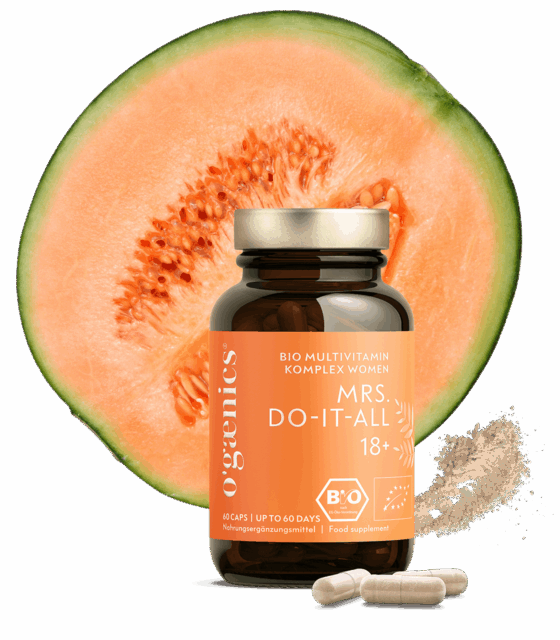
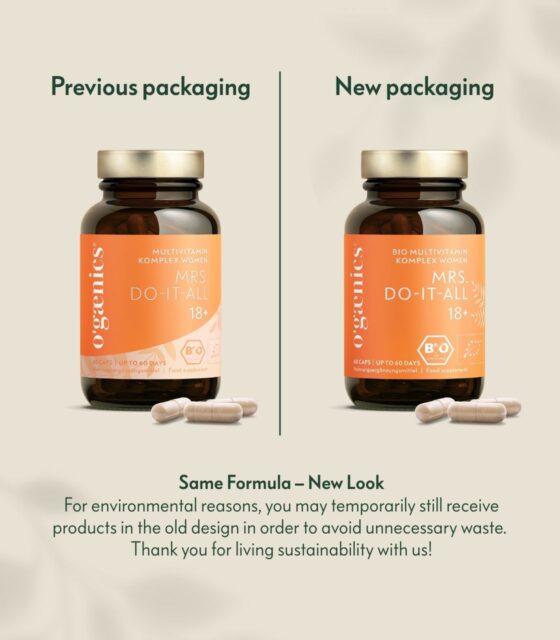
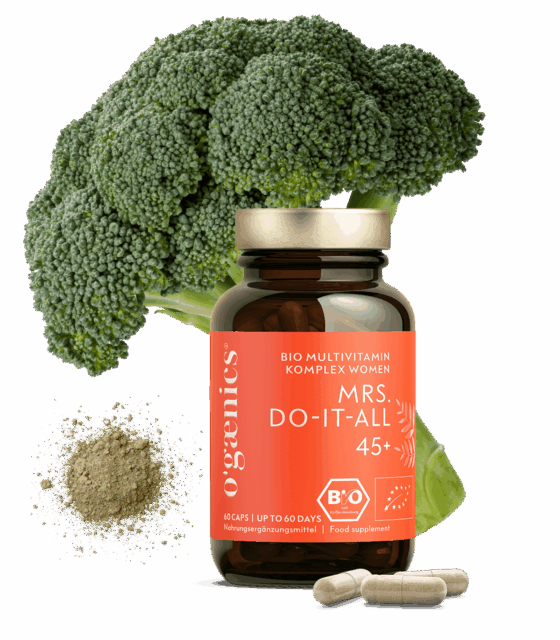
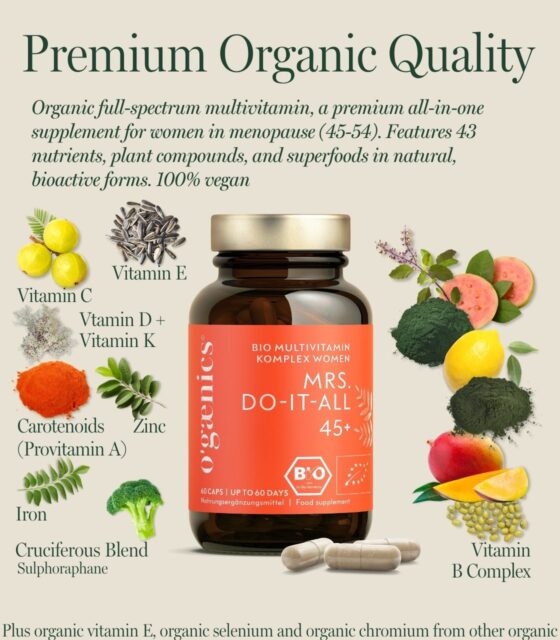
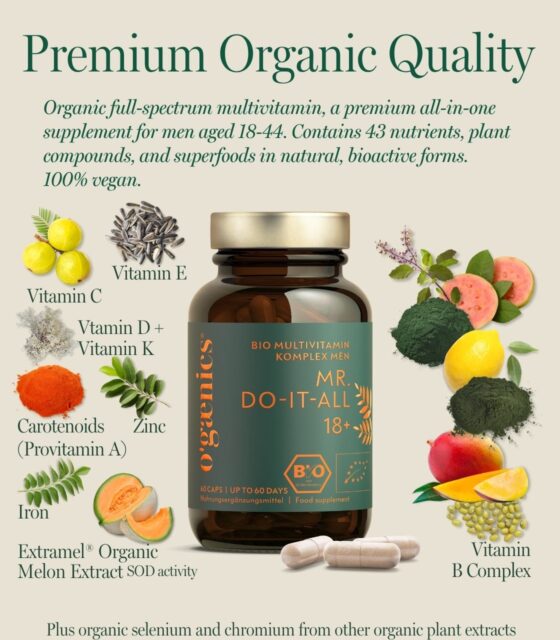
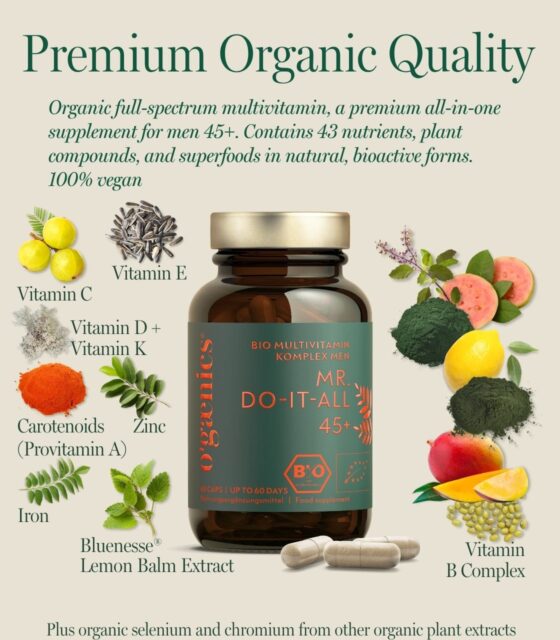
That’s why Ogaenics doesn’t develop a one-size-fits-all formula. Our organic multivitamins are tailored to gender and life stage: from MRS DO-IT-ALL 18+ to the formulas for 45+, 55+, and 65+, as well as MR DO-IT-ALL 18+ and 45+. For pregnancy and breastfeeding, MRS PRENATAL offers a dedicated nutrient formula for this sensitive life stage.
Discover the unique Ogaenics organic multivitamin formulas.
Our organic multivitamins contain only organic vitamins, organic trace elements, and organic minerals from organic plants, organic algae, and organic mushrooms—developed to support your energy, your immune system, your mood, your nervous system, skin, hair and nails, and your long-term vitality.
Organic multivitamins for women
-
Bestseller

Mrs Do-It-All 18+
Organic Multivitamin Complex Premium for women of fertile age, All-In-One!79,90 €2.302,59 € / kg
-
Bestseller
Mrs Do-It-All 45+
Organic Multivitamin Complex Premium for menopausal women, All-In-One!79,90 €1.997,50 € / kg
-
Bestseller
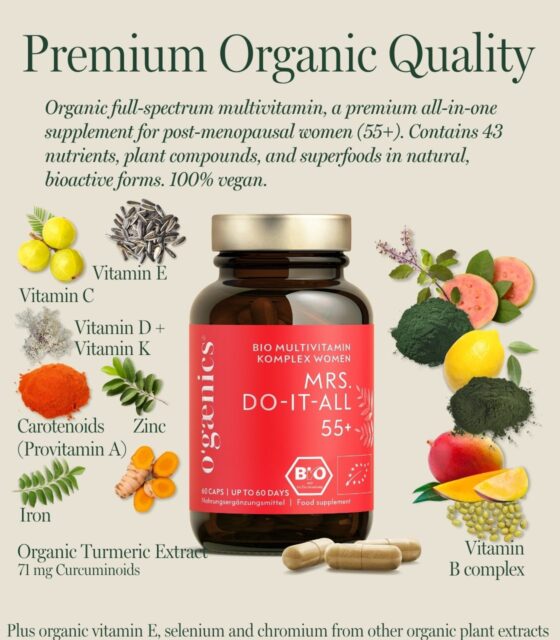
Mrs Do-It-All 55+
Organic Multivitamin Complex Premium for women after the menopause, All-In-One!79,90 €1.997,50 € / kg
-
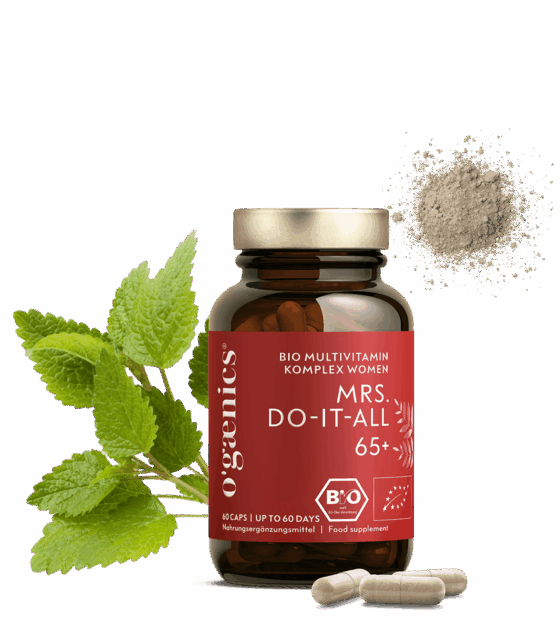
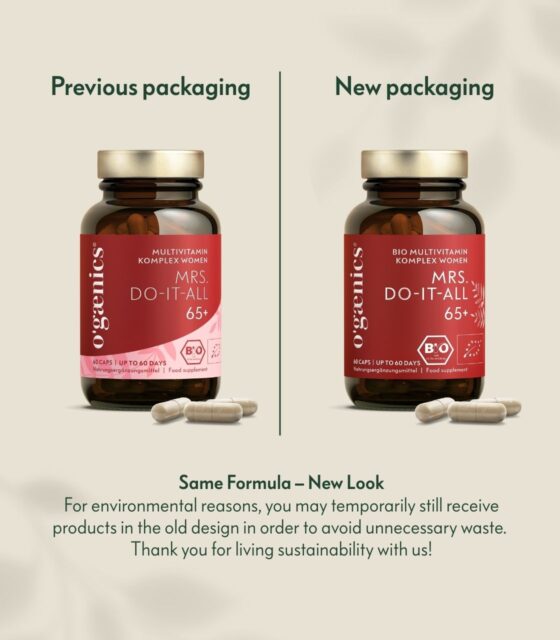
Mrs Do-It-All 65+
Organic Multivitamin Complex Premium from vitamin A to zinc for women aged 65 and over, All-In-One!79,90 €2.091,62 € / kg
-
Mrs. Prenatal
The best organic multivitamin complex for pregnancy and breastfeeding, 100% natural, all-in-one!79,90 €1.736,96 € / kg



Organic multivitamins for men
-
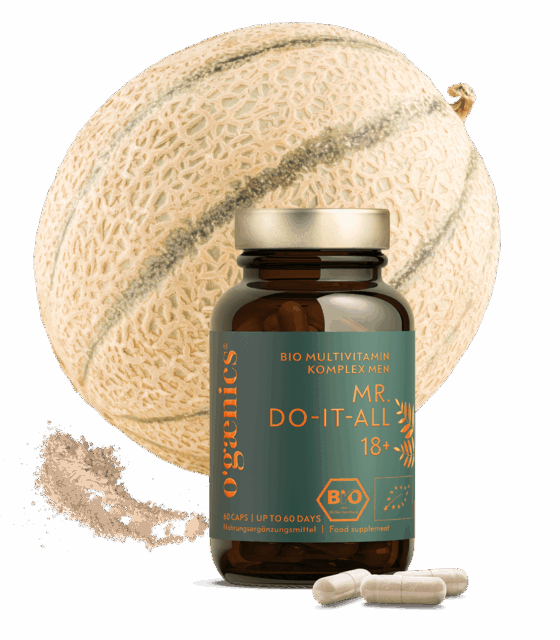
Mr Do-It-All 18+
Organic Multivitamin Complex Premium for men between 18 and 44, All-In-One79,90 €2.069,95 € / kg
-
Mr Do-It-All 45+
Organic Multivitamin Complex Premium for men aged 45 and over, All-In-One79,90 €2.048,72 € / kg




 No products in the cart.