



How a fruit with natural variations becomes a reliably dosable vitamin source
An amla fruit is a natural product. It grows outdoors, is influenced by sun, rain, soil, and temperature, and therefore does not contain exactly the same amount of vitamin C with every harvest.
Yet we can state precisely how much vitamin C our standardized organic amla extract delivers.
How does that work?
The answer leads to an area of supplementation that is surprisingly little discussed: the standardization of natural plant extracts for vitamins and minerals.
Plants don’t follow a recipe
With a synthetically produced vitamin, the starting situation is comparatively simple. The individual substance can be manufactured in a defined purity and then dosed precisely.
With a vitamin from a plant, it looks different.
Plants are complex biological systems. Their composition can be influenced by variety, soil, climate, precipitation, sun exposure, degree of ripeness, and harvest time, among other factors.
The natural vitamin C content of an amla fruit is therefore not a fixed quantity either.
This raises a crucial question for us: How can we use the plant as a natural nutrient source while ensuring that a daily dose of our supplement reliably contains the declared amount of vitamin C?
That’s exactly what standardized plant extracts are for.
What does “standardized” actually mean?
For plant extracts, standardization means that a defined specification is established for a particular constituent.
You may know this from classic plant compounds. An ashwagandha extract, for example, can be standardized to a specific withanolide content. With grape seed extracts, the content of polyphenols or OPC can be defined. With milk thistle, silymarin is a typical marker.
At Ogaenics, we also use this principle for something else: vitamins and minerals that occur naturally in plants.
One example is our organic amla extract as a source of natural vitamin C.
The finished extract is standardized to a defined vitamin C content. This turns a naturally variable raw material into a reliably dosable vitamin source.
Why amla?
Amla, also called Indian gooseberry, is the fruit of the amla tree Phyllanthus emblica and has been used in India for centuries.
Particularly interesting for supplements is its natural vitamin C content as well as the complex spectrum of other plant constituents.
That’s why we don’t simply use dried amla powder. For precise nutrient supply, we need an extract where it’s known how much vitamin C it actually delivers.
And this is exactly where the real technological work begins.
Step 1: Quality starts in the field
Standardization begins long before extraction.
Origin and quality of the fruits, harvest time, and processing of the starting material influence the composition of the later extract.
With organic raw materials, there’s an additional requirement: cultivation and processing must also meet the requirements of organic certification.
The individual raw material batches are tested. This means it’s known what natural starting material is being worked with.
Because one harvest can have a different vitamin C content than the next.
Step 2: From fruit to concentrated extract
Now comes the extraction.
The goal is to obtain or concentrate the desired constituents from the plant matrix. Depending on the plant species and target substance, suitable methods must be developed.
In natural extraction processes, for example, water can be used as the extraction medium. For certain plant compounds, CO₂ methods are also an option.
There are also approaches in so-called Green Chemistry. Here, manufacturing processes are developed to avoid problematic solvents as much as possible, use resources efficiently, and employ the most environmentally compatible methods possible.
Parameters such as temperature, time, pressure, and pH value can also have a significant influence on which constituents are obtained from a plant and how stable they remain during processing.
This is particularly relevant for vitamin C, because vitamin C reacts sensitively to certain external influences.
The extraction method must therefore match the raw material and the desired nutrient.
Step 3: Now it’s measured
After processing, we don’t calculate from a table how much vitamin C should theoretically be present.
The actual content is verified analytically.
The laboratory can thus determine what the vitamin C concentration of the respective extract batch actually is.
This analysis is a central component of standardization. Only when it’s known what’s really in the extract can it be assessed whether the established specification is met.
Step 4: Natural variations are compensated in a controlled manner
Now comes the part that turns a variable natural product into a standardized extract.
Different harvests can deliver different starting concentrations. Through a controlled manufacturing process and the targeted adjustment of suitable extract batches, the finished raw material is kept within the defined specification.
For example, a minimum content for vitamin C is established.
A released batch must reach this value. Possible variations upward also remain within the specification limits defined for the raw material.
This creates, batch by batch, an extract with a reliably defined nutrient content.
And this is where it gets particularly exciting for us
Standardized plant extracts are nothing unusual in the supplement industry.
However, characteristic secondary plant compounds are often standardized, for example curcuminoids from turmeric, withanolides from ashwagandha, or silymarin from milk thistle.
At Ogaenics, we’re additionally interested in plants as a source of essential micronutrients.
Amla delivers vitamin C.
Curry leaves can be used as a plant-based iron source.
Guava leaves can serve as a source of zinc.
This means vitamins and minerals can come from a complex plant matrix and still be used in a defined, analytically controlled amount.
Why don’t we simply use plant powder?
Because “contains amla” doesn’t yet say how much vitamin C is actually in a daily dose.
That’s an important difference.
A simple fruit powder can contain valuable plant constituents. However, its natural vitamin and mineral content can vary.
With an amla extract standardized for vitamin C, on the other hand, we know the relevant concentration. This allows us to develop the formula so that the intended daily dose reliably delivers a defined amount of vitamin C.
For a supplement, this reproducibility is crucial.
Nature and precision can go together
For us, that’s exactly where the fascination of modern plant extraction lies.
We want to preserve the plant as the origin of the nutrient. At the same time, we expect precision from a high-quality supplement.
This requires controlled organic raw materials, suitable extraction methods, analytical testing, and a great deal of know-how in standardization.
In the end, you see little of that.
You see a capsule.
Behind it, however, is the task of producing an organic plant extract from an amla harvest that’s allowed to develop a little differently each year—one whose vitamin C content we can rely on.
That’s exactly what we mean by plant-based nutrient supply with a scientific standard.
You'll find vitamin C from an organic amla whole extract in these supplements
-

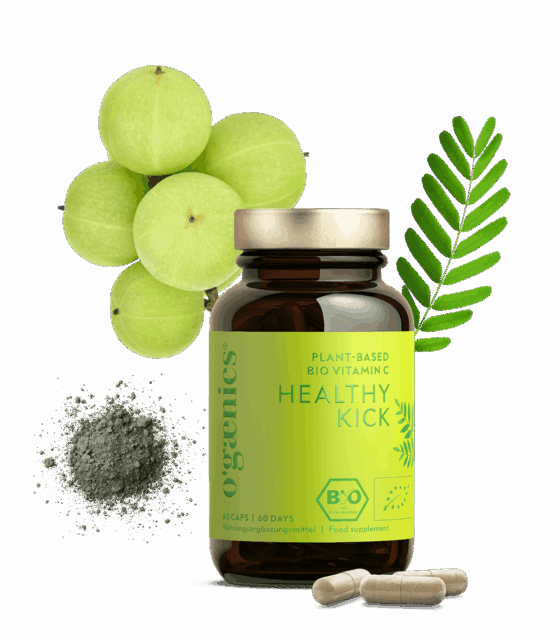
Healthy Kick
60-day supply of plant-based organic vitamin C from premium organic amla extract with polyphenols for the immune system29,90 €869,19 € / kg
-
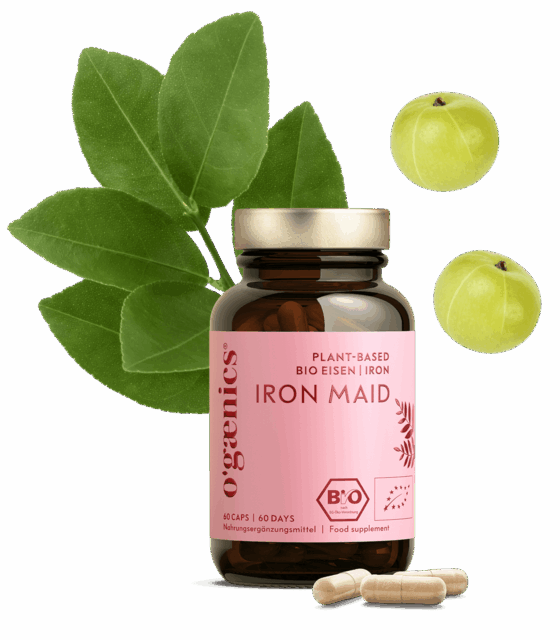
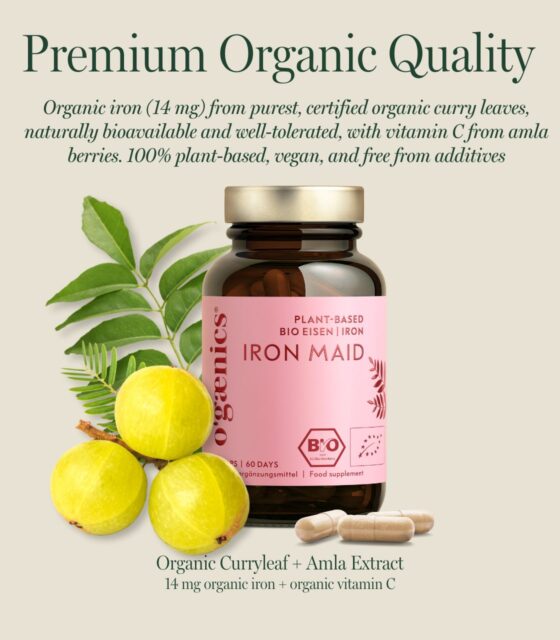
Iron Maid
60-day supply of organic iron from premium organic curry leaf extract with active partner vitamin C from organic amla extract54,90 €1.389,87 € / kg
-
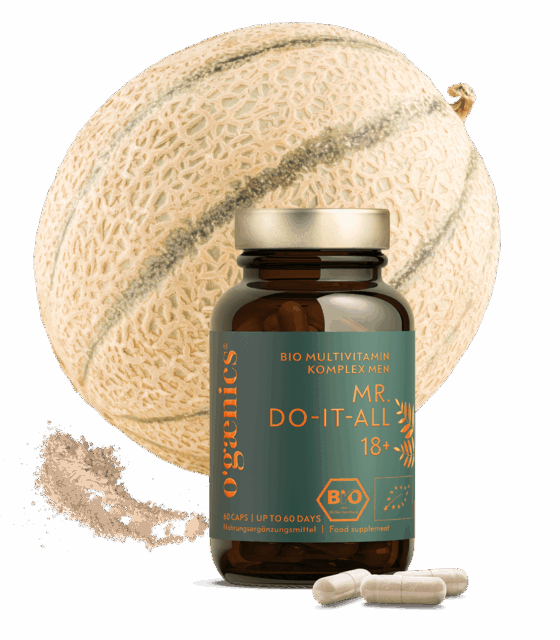
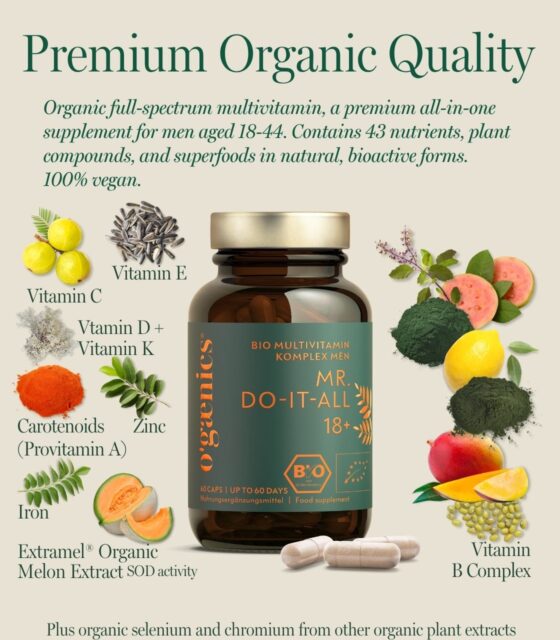
Mr Do-It-All 18+
Organic Multivitamin Complex Premium for men between 18 and 44, All-In-One79,90 €2.069,95 € / kg
-
Bestseller
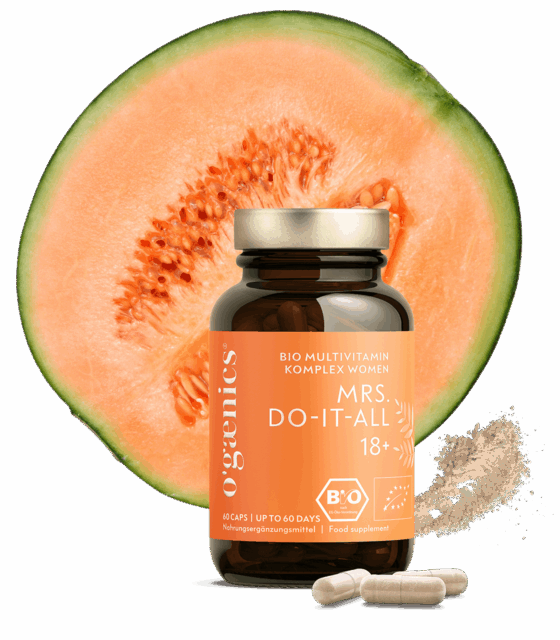
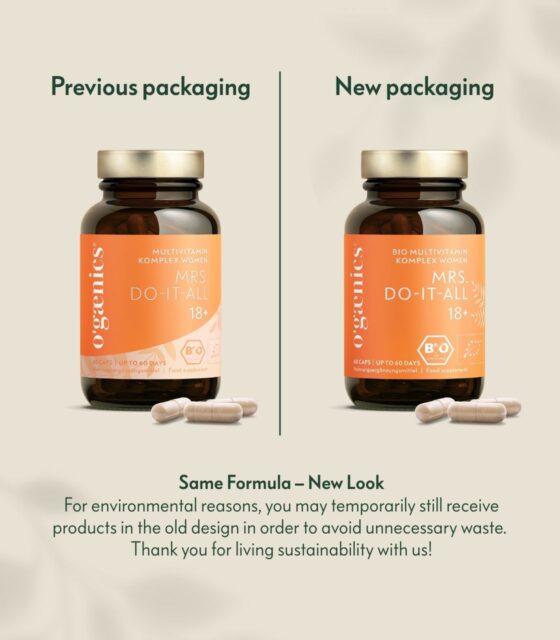
Mrs Do-It-All 18+
Organic Multivitamin Complex Premium for women of fertile age, All-In-One!79,90 €2.302,59 € / kg




 No products in the cart.